Taiko thrives on power, rhythm, and movement. But a drum isn't always available - be it at home, while traveling, or in everyday life. The good news: practicing taiko is possible even without a large drum, and in many cases, it's even particularly effective.
Here you will learn how to make your taiko training meaningful at home or on the go, and what possibilities there are to specifically improve technique and rhythm.
Why regular taiko training is so important
As with any rhythmic discipline, taiko also relies on repetition and continuity. Regular practice helps to:
- internalize movement sequences
- improve timing and rhythm
- build strength and stamina
- develop confidence in playing
Short, regular sessions are often more effective than infrequent, long training sessions.
Practicing taiko without a drum - is that even possible?
Yes, and very well at that. Many taiko fundamentals can be trained independently of a large drum.
These include:
- striking technique with bachi
- movement sequences and posture
- rhythm exercises (e.g., with a metronome)
- coordination of both hands
This means: practicing taiko without a drum is not only possible but an important part of the training.
Quiet taiko exercises for home
A common problem: taiko is loud. Intense drumming is often not possible, especially in apartments or multi-family homes.
Alternatives for quiet training:
- air exercises (without contact)
- practicing on soft surfaces
- focus on technique rather than volume
Training becomes even more effective with a suitable practice surface that offers realistic feedback at low volume.
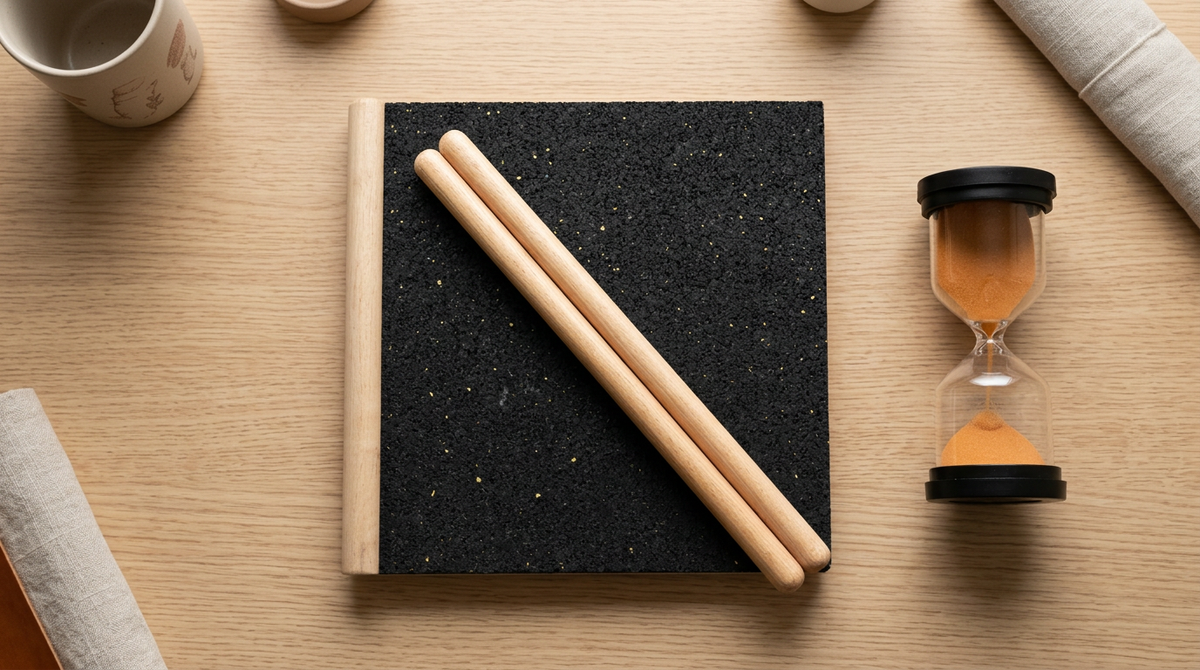
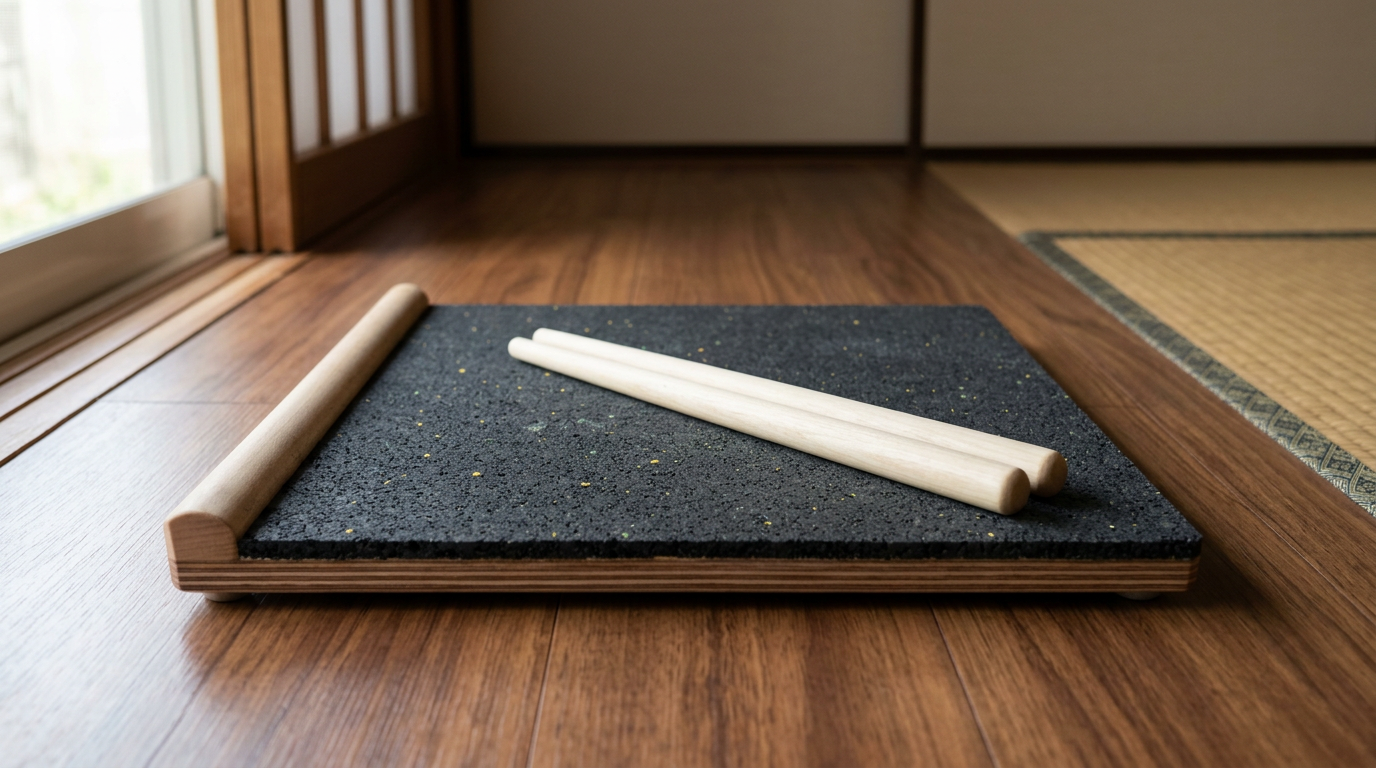
One option for this is a special taiko practice pad, which allows you to practice movements and strokes in a controlled manner - without the volume of a real drum.
Taiko training on the go
Taiko can also be easily integrated into everyday life while on the go.
Typical situations:
- travel
- short breaks in everyday life
- warm-up before rehearsals or performances
What you need for this:
- your bachi
- some space
- optionally a compact practice surface
Especially when on the go, it is helpful to have a light and portable training solution with you to be able to practice at any time.
Effective exercises for your taiko training
Regardless of the location, you can specifically work on your fundamentals.
1. Repeat basic strokes
Slow, clean execution improves technique and control.
2. Rhythm exercises
With a metronome or fixed patterns, you train timing and precision.
3. Isolate movement sequences
Execute individual movements consciously and controllably.
4. Practice combinations
Combine strokes and movements - slowly at first, then faster.
Benefits of structured training without a drum
Even if it seems unusual at first: taiko training without a drum has clear advantages.
- focus on technique rather than volume
- lower physical strain
- flexible practice possible at any time
- better control over movements
Many advanced players specifically integrate such sessions into their training.
Taiko practice is possible everywhere
Whether at home or on the go - taiko practice is possible at any time. With the right exercises and some structure, you can effectively improve technique, rhythm, and movement sequences.
Tools like a taiko practice pad support you in training realistically without relying on a large drum.
This keeps your training flexible and allows you to continuously develop.