
At first, motivation is usually high. The first bachi are there, the first strikes on the pad feel good, and you resolve to practice every day. After a few weeks, daily life often looks different: sometimes there's no time, sometimes no structure, and daily training quickly turns into an irregular "when I feel like it."
This is not a problem of discipline, but mostly a problem of equipment and routine. Someone who knows when and for how long they will practice is more likely to stick with it than someone who has to decide anew each time.
Why short, regular sessions are more effective
With Taiko, what matters most is what comes into the hands and body: striking technique, timing, endurance. This doesn't develop through a single long practice session once a week, but through short, recurring sessions. It's better to practice ten minutes every day than an hour once a week. This applies to beginners as well as advanced players who are working on individual details of their technique.The three building blocks of a good training ritual
A functioning practice ritual needs three things: a suitable surface, the right tools, and a clear time signal. Exactly these three parts are included in Ready Practice.
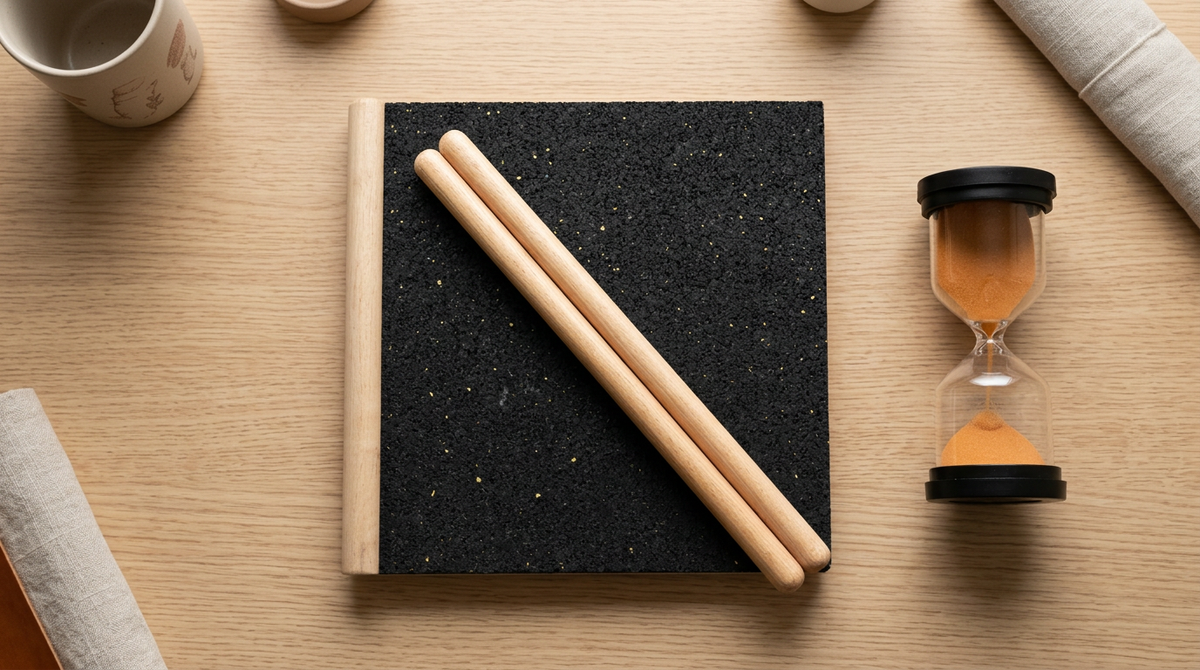
The practice pad with a wooden edge gives you a realistic yet gentle striking feel, without the need for a real drum. The beech bachi fit well in the hand and are a solid choice for both beginners and regular training. And the hourglass takes on the role that a smartphone often plays: a simple, visual signal of how long the current session will last, without distractions from calls or notifications.
Choosing the right duration for your training
Not every practice session has to be the same length. For a quick warm-up before group training, three minutes are often enough. For a solid session at home, ten minutes are good – long enough for a few exercises, short enough to fit into a busy day. Twenty minutes are ideal if you want to work specifically on a single technique or prepare for a workshop.Practical tips for your practice ritual
- Set a fixed time of day, for example, right after getting up or before dinner. Fixed times are easier to turn into a habit than spontaneous resolutions.
- Set up a small, dedicated practice corner. If the pad, bachi, and hourglass are always within reach, the inhibition to actually start decreases.
- Start with the shortest duration if you're just getting back into it. It's easier to extend a session than to endure one that's too long.
- Also use the hourglass as a signal for short breaks between several practice blocks, not just for the practice time itself.
-
After each session, briefly note what you want to work on next. This gives the next session a direct direction.

